


Mémoires de recherche
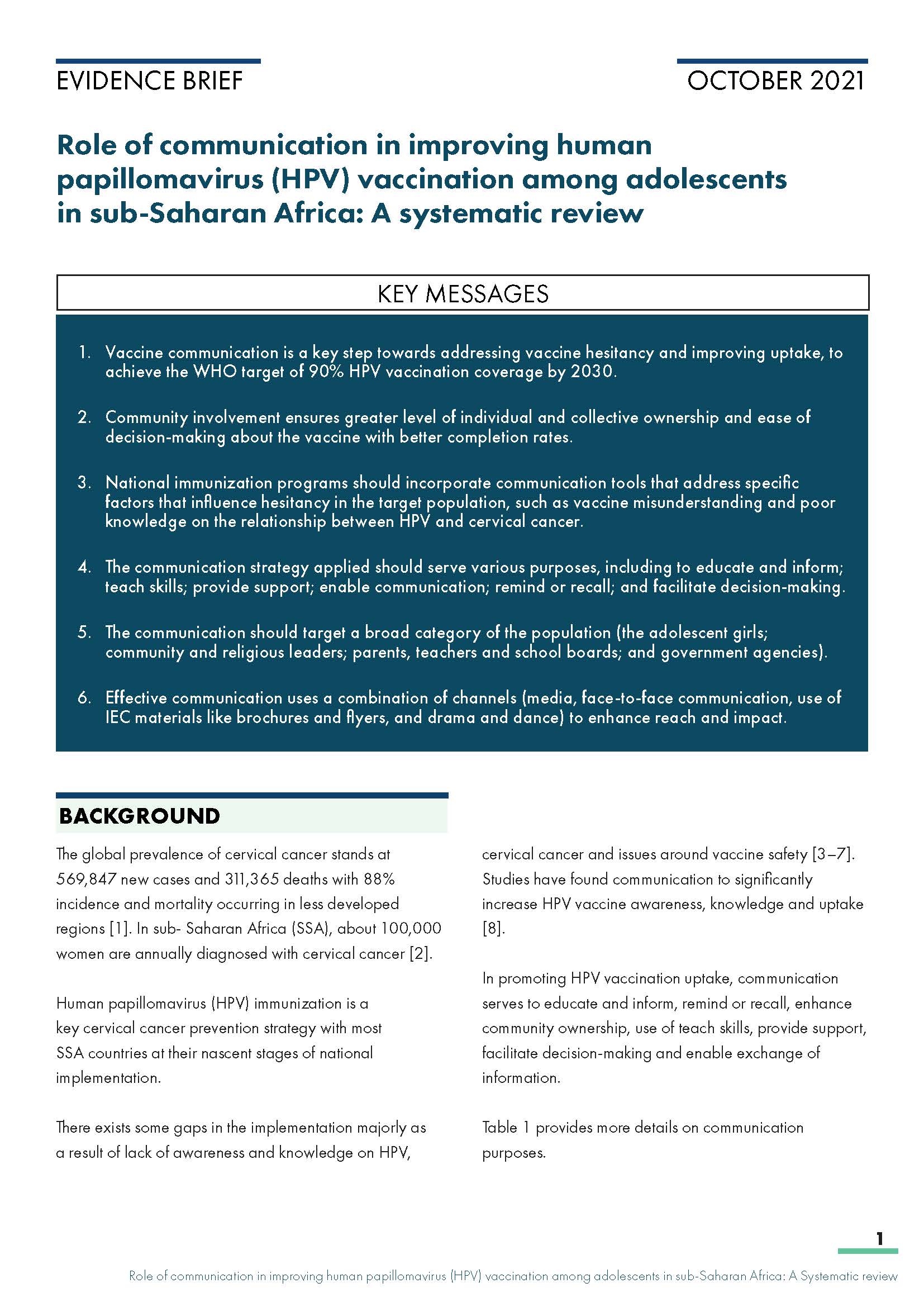
Human papillomavirus (HPV) immunization is a key cervical cancer prevention strategy with most sub-Saharan African (SSA) countries at their nascent stages of national implementation. In the fight against cervical cancer especially prevention, communication is key in addressing vaccine hesitancy and improving uptake. This rapid evidence brief provides a summary of the communication strategies employed to promote HPV vaccination among adolescents in SSA and accelerate efforts to achieve the WHO target of 90% HPV vaccination coverage by 2030.
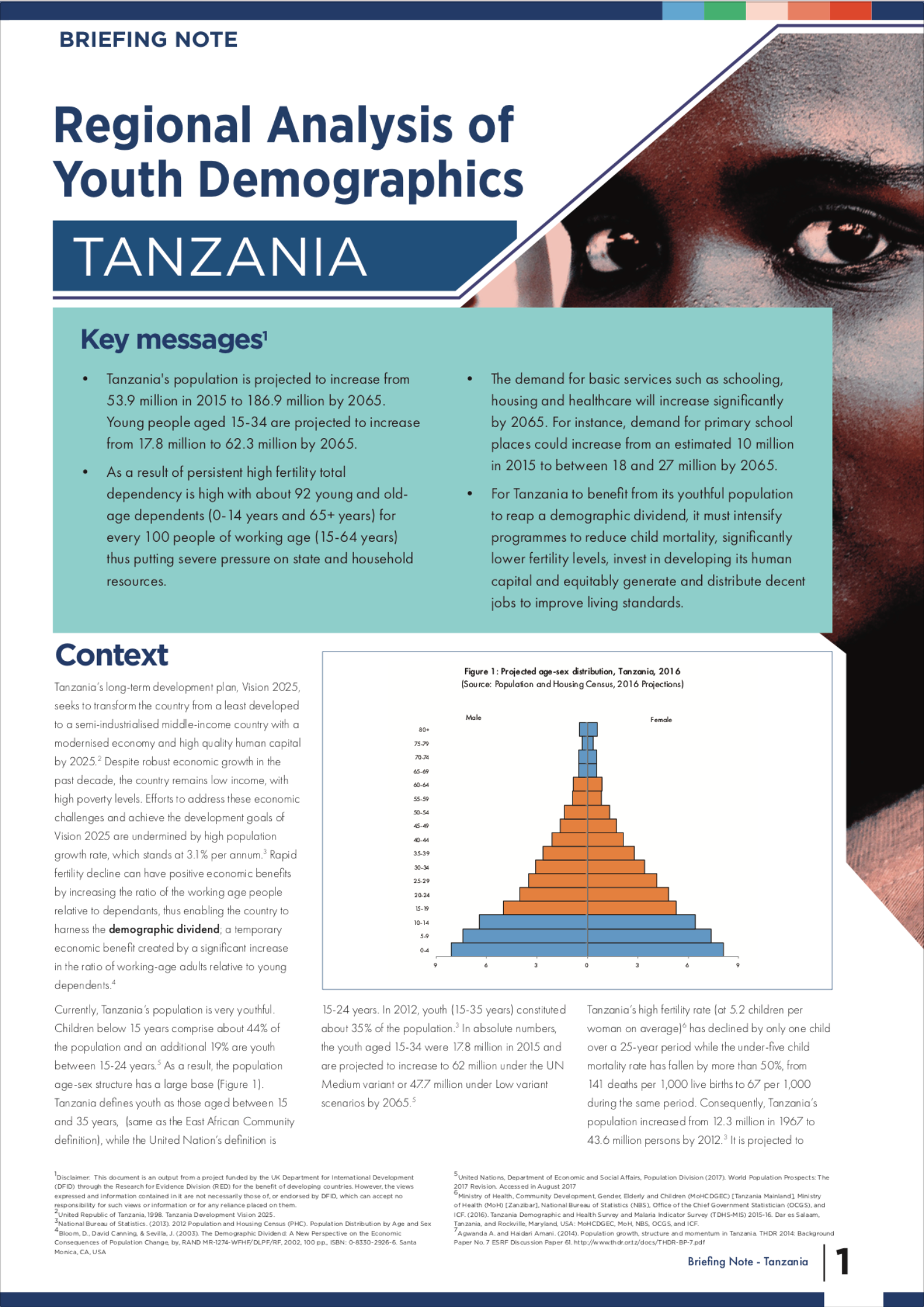
The East African Regional Analysis of Youth Demographics study examined youth population dynamics, policies and other economic and natural challenges in Kenya, Rwanda, Tanzania and Uganda and the impact they can have on the socioeconomic transformation of a country. The compilation and production of this research uptake report is a culmination of various research communication and engagement forums attended by a cross-section of stakeholders in the field of development from the East African Community (EAC) and beyond.
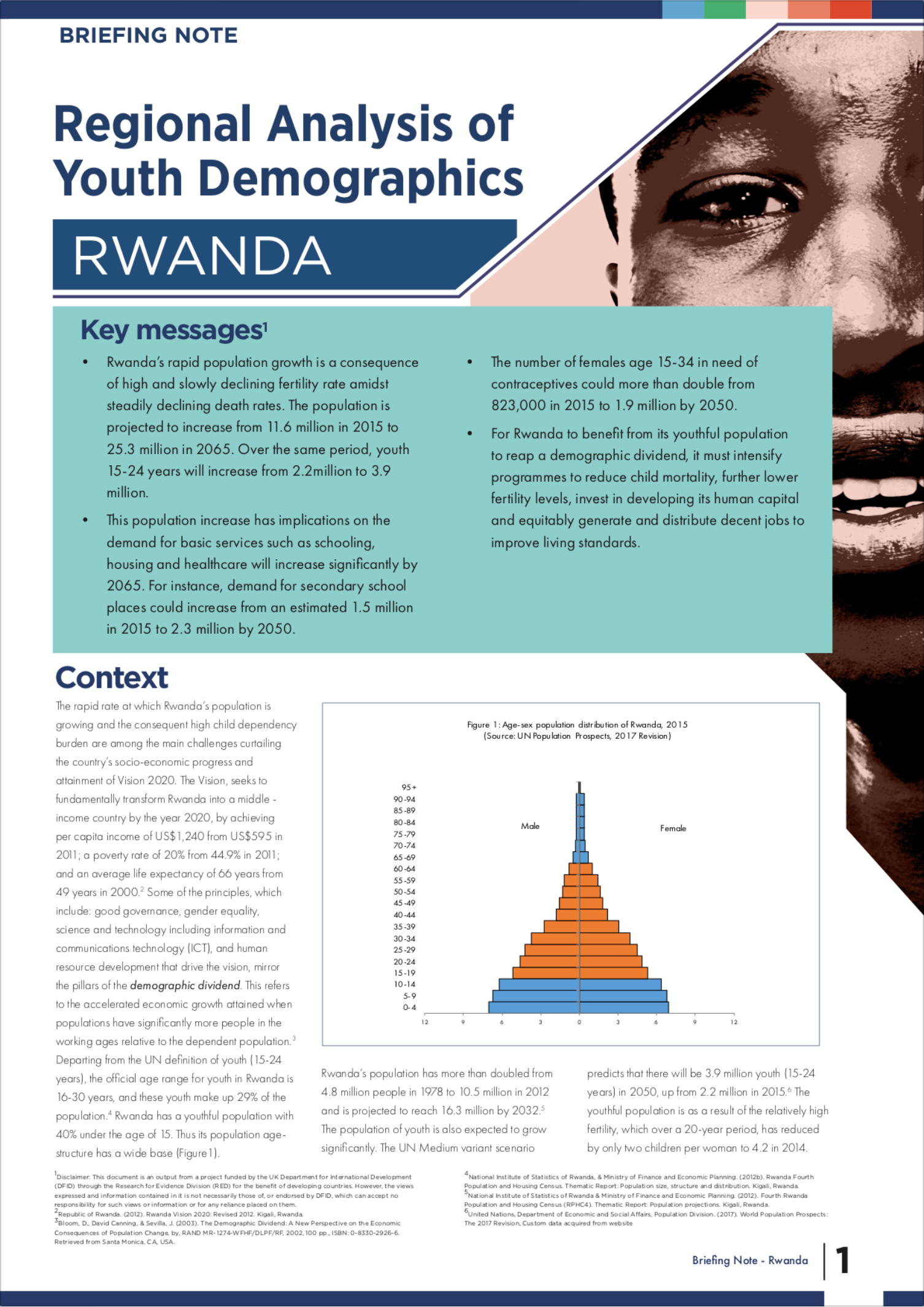
This briefing note summarises a review of literature and policies on youth demographics and implications from our scenario modelling of the short, medium and long-term projections of the youth population in Rwanda, and their demand for essential services.
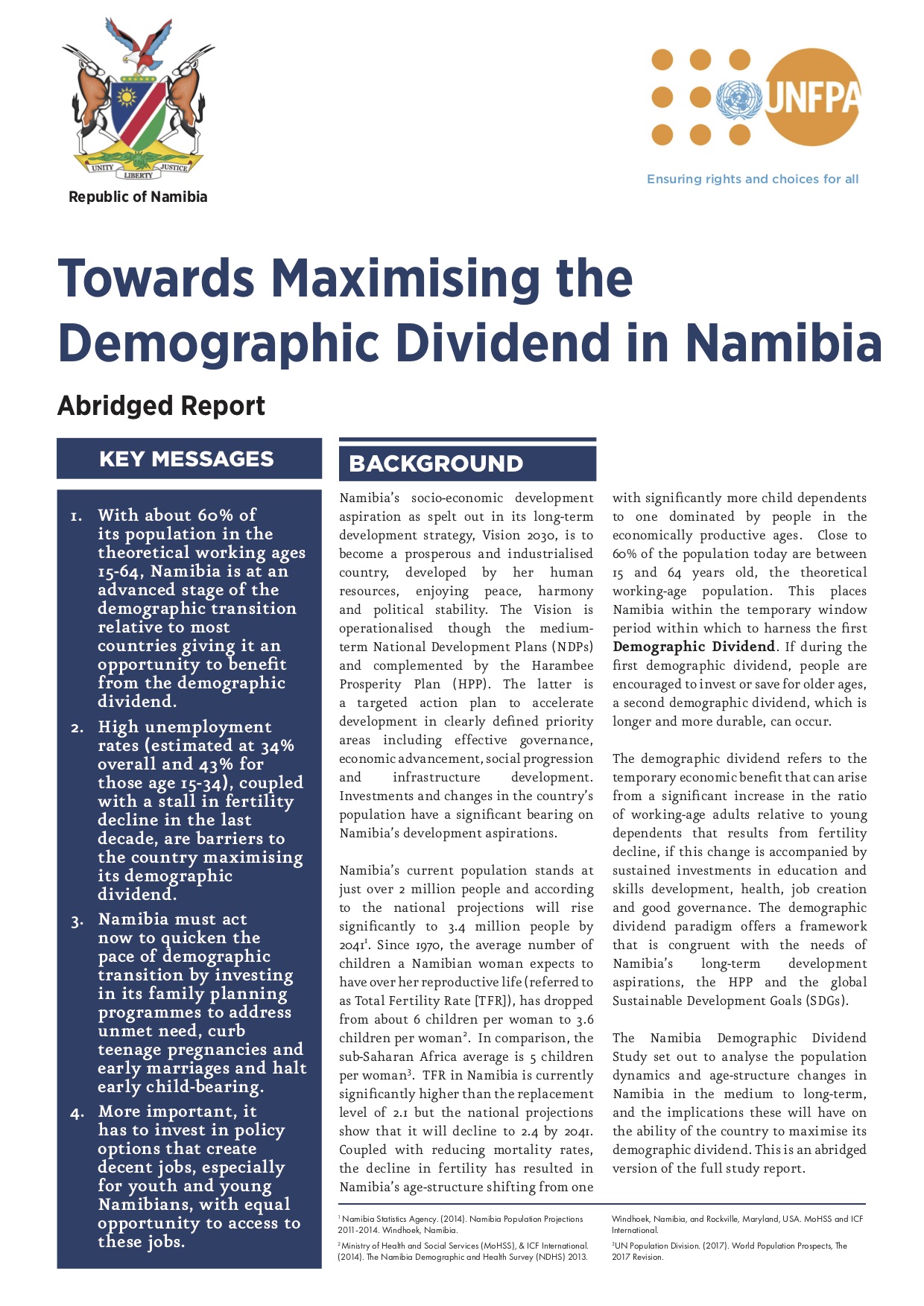
The primary objective of this study was to assess Namibia’s prospects for harnessing the demographic dividend and to identify priority options for maximising the dividend. Demographic change has implications for the realisation of these ambitions. This report, therefore, outlines the key policy recommendations on how Namibia can harness the potential of her youthful population to achieve socio-economic development. The Demographic Dividend paradigm offers a framework that is congruent with the needs of Namibia’s long-term development aspirations as well as the global Sustainable Development Goals (SDGs).
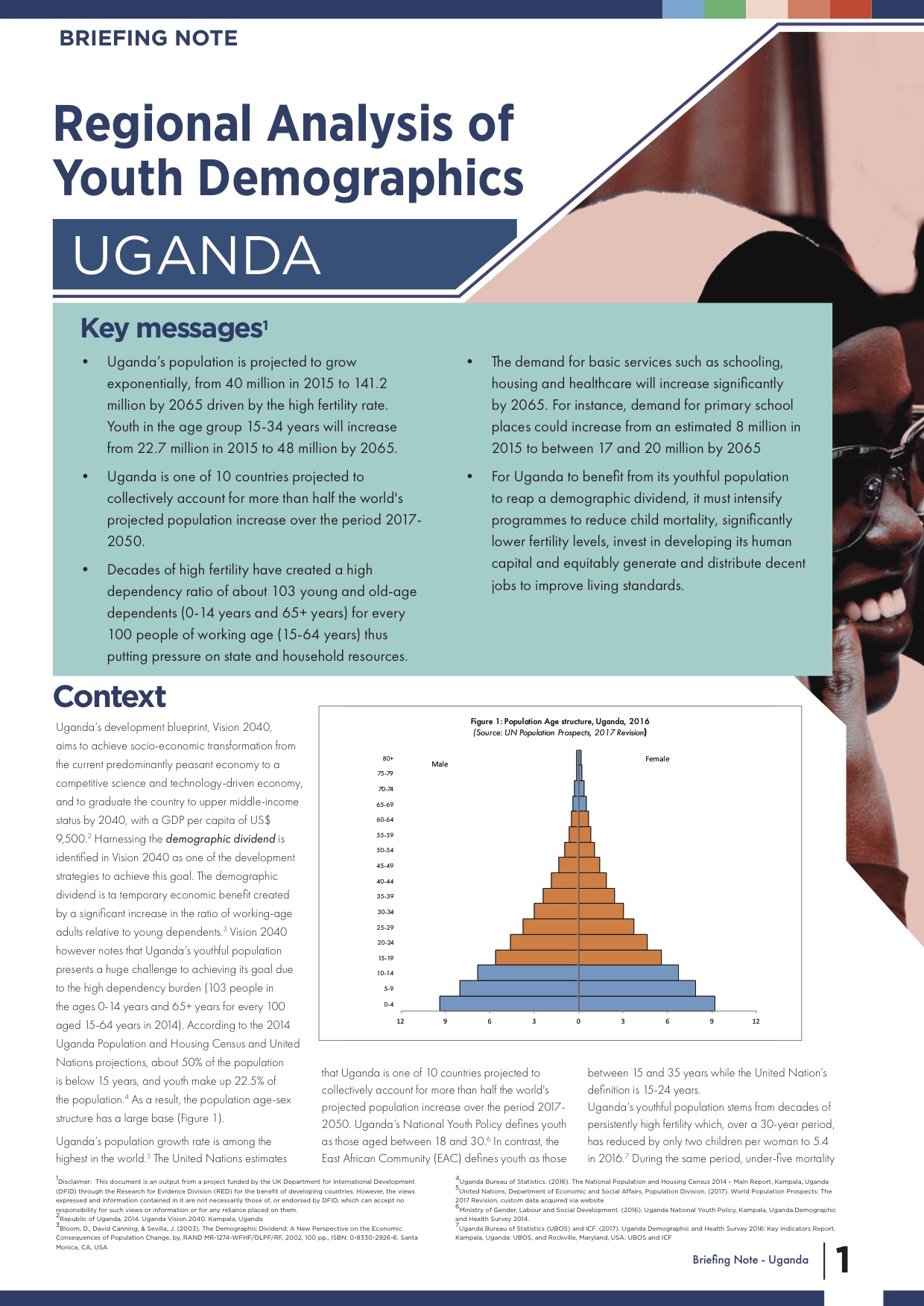
This briefing note summarises a review of literature and policies on youth demographics and implications from our scenario modelling of the short-term and medium-term projections of the youth population in Uganda. Specifically, the briefing note highlights the demand for basic services against population projections.
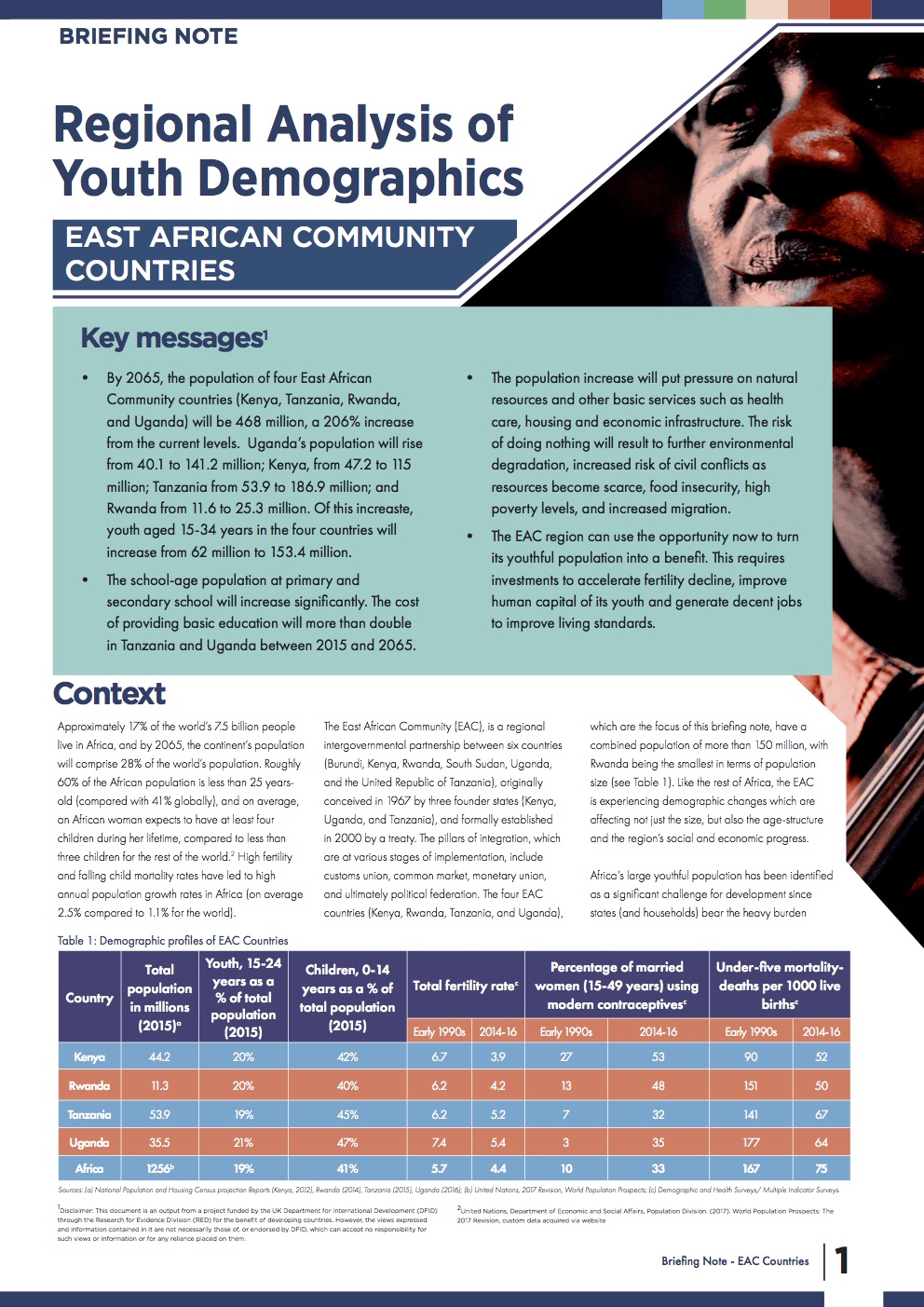
The East African Community (EAC), is a regional intergovernmental partnership between six countries (Burundi, Kenya, Rwanda, South Sudan, Uganda, and the United Republic of Tanzania), originally conceived in 1967 by three founder states (Kenya, Uganda, and Tanzania), and formally established in 2000 by a treaty.
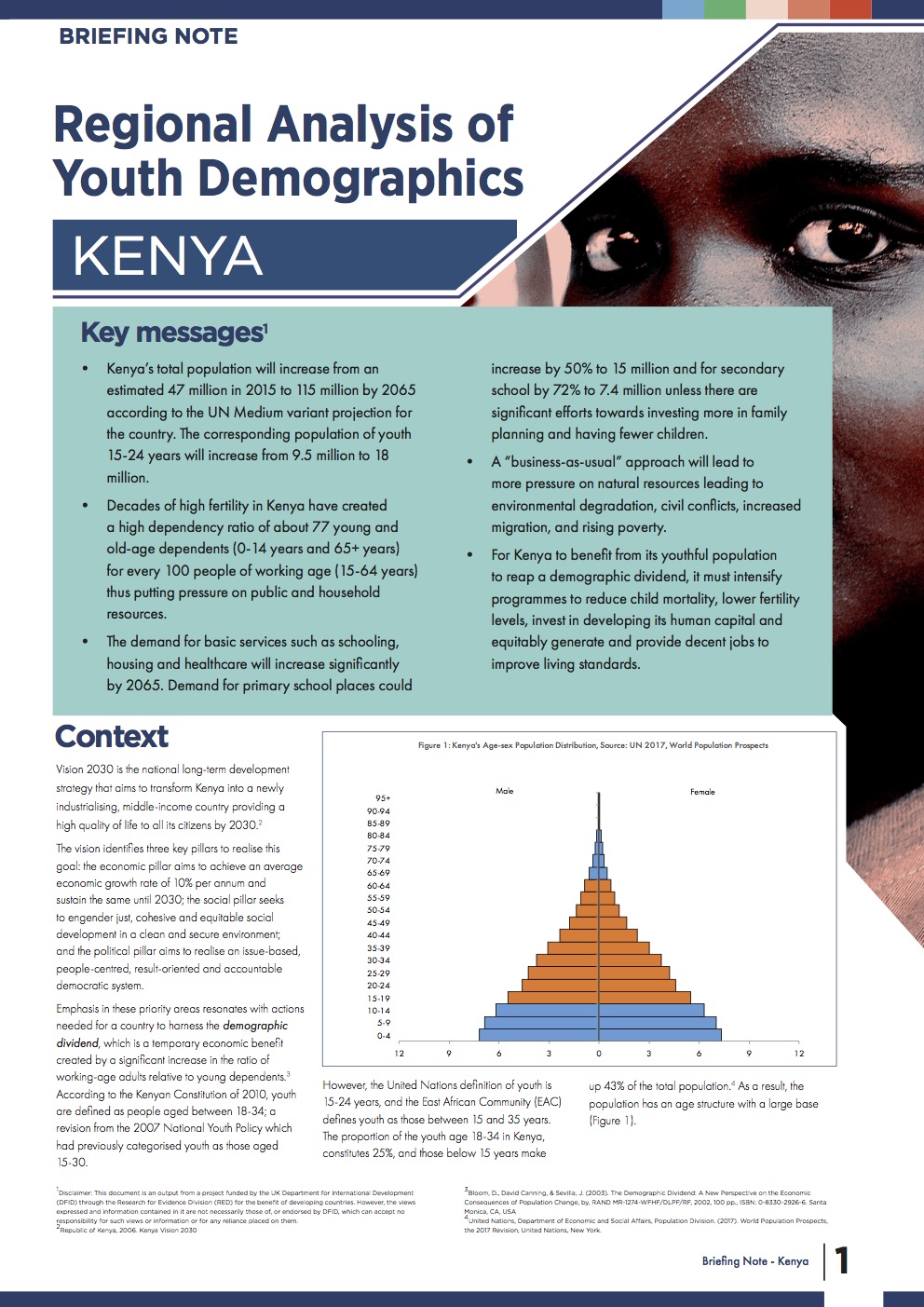
This research briefing note summarises a review of literature and policies on regional youth demographics and highlights implications from scenario modelling of the short-term, medium and long-term projections of the youth population in Kenya. Specifically, the briefing note highlights the demand for basic and social services against population projections.
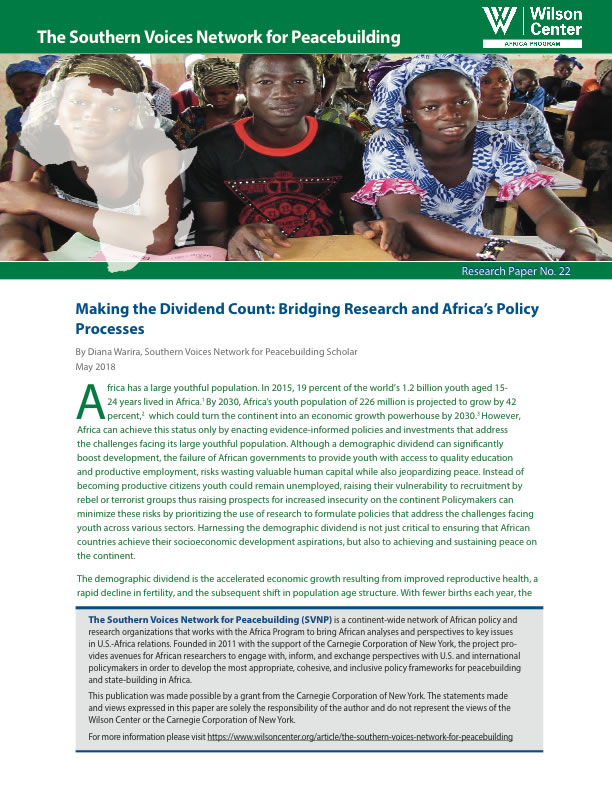
Despite this high-level expression of commitment, policymakers still need to do more to integrate demographic dividend research into their country’s policymaking processes. Drawing on the experiences of expert engagements with policymakers in Uganda, Malawi, and Kenya this paper outlines how experts have effectively communicated demographic dividend research to government officials, who in turn, incorporated these results into policies.
The Network of African Parliamentary Committees of Health (NEAPACOH), previously known as the Southern and Eastern Africa Parliamentary Alliance of Committees on Health (SEAPACOH)) is one of the active networks engaging members of parliament (MPs) in Africa to strengthen the delivery of their functions of oversight, legislation and representation, in tackling health challenges in the region.