


Brochures

Building Capacity for Integrated Family planning (FP) and Reproductive Health (RH) and Population, Environment and Development (PED) Action (BUILD) is a global program designed to leverage the interconnectedness of Population, Environment and Development, to spur strong political commitment, sustained financial resources, and accountability for voluntary family planning and reproductive health in low-and middle-income countries (LMICs). The BUILD Project seeks to address interlinked Population, Environment and Development (PED) challenges for sustainable development in LMICs to enable integrated FP/RH and PED action using the Systems thinking approach.

The Making a case for Planetary Health Making in sub-Saharan Africa (Planetary Health) project aims to build the evidence base for policy and programmes that address the health impacts of climate change in Sub-Saharan Africa. The project will develop and test policy options that have the potential to deliver generalizable and transferable lessons for improving the local environment, global environmental sustainability and population health.

Evidence has an important role to play in improving policy, programme and practice decisions that ultimately improve development effectiveness. Among the many factors that hinder the use of evidence in decision-making is weak individual and institutional capacity in sourcing, appraising, synthesising and applying evidence. The Heightening institutional capacity for government use of health research (HIGH-Res) project aims to respond to this challenge by implementing interventions that will strengthen institutional capacity for the use of health research in policy and programme decisions in Kenya, Malawi and Uganda.

The Evidence Leaders in Africa (ELA) project aims to expand leadership for the use of evidence in policy formulation and implementation by African governments. The project will run for 2 years, coordinated by AFIDEP and the African Academy for Sciences (AAS).
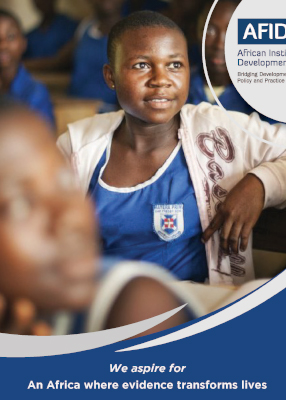
Founded in 2010, to help bridge the gaps between research, policy, and practice in development efforts in Africa, AFIDEP contributes to the realisation of the SDGs by enabling the formulation of sound development policies and programme interventions. We work to promote and entrench a culture of evidence use in development efforts in Africa.
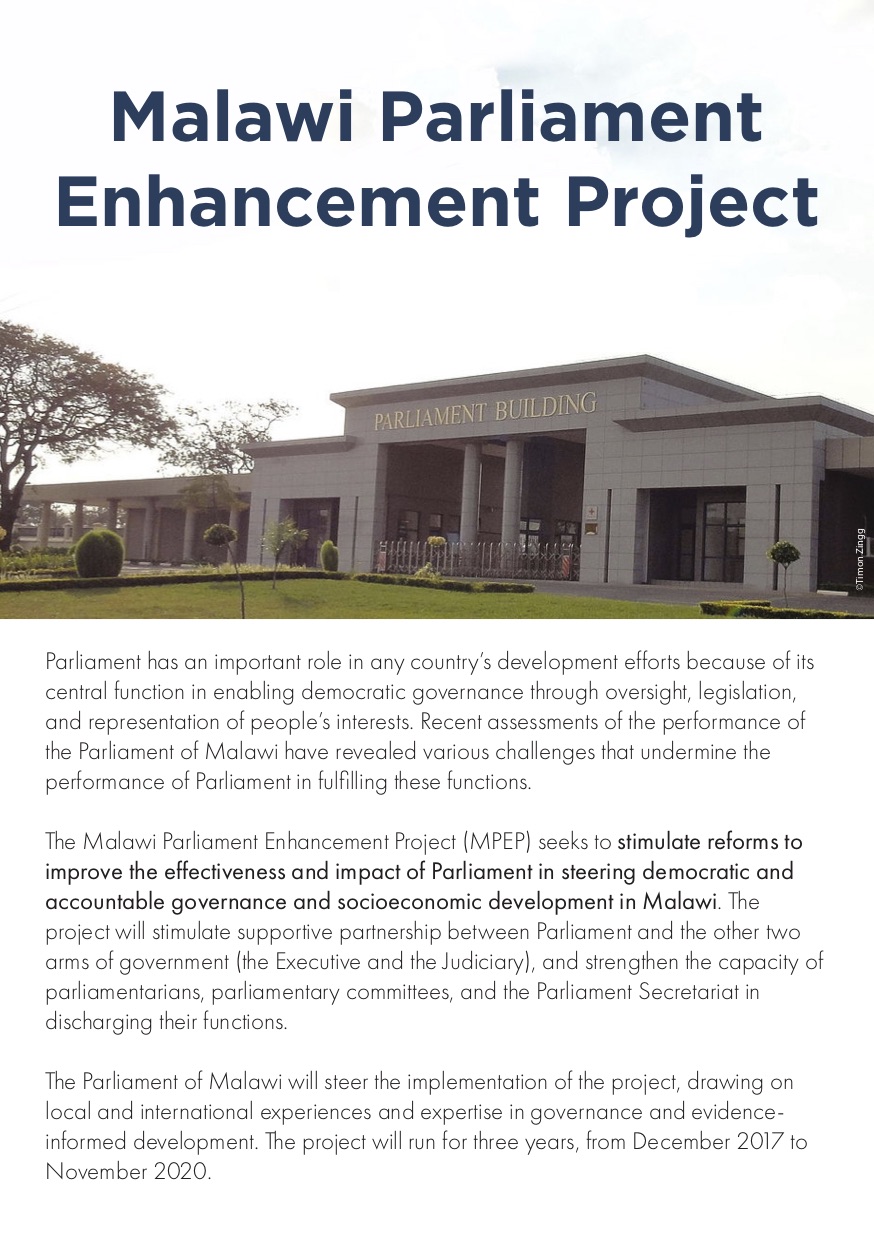
The Malawi Parliament Enhancement Project (MPEP) seeks to stimulate reforms to improve the effectiveness and impact of Parliament in steering democratic and accountable governance and socio-economic development in Malawi. The project will stimulate supportive partnership between Parliament and the other two arms of government (the Executive and the Judiciary), and strengthen the capacity of parliamentarians, parliamentary committees, and the Parliament Secretariat in discharging their functions.