


Publications

AFIDEP News is the African Institute for Development Policy (AFIDEP) newsletter. It is published twice a year to provide our stakeholders with updates on AFIDEP’s programmes and highlight emerging policy issues in population dynamics and demographic dividend; health and wellbeing; transformative education and skills development; environment and climate change; and governance and accountability. Download here:

Le projet BUILD (Building Capacity for Integrated Family Planning (FP) and Reproductive Health (RH) and Population, Environment and Development (PED) Action) est un projet international de cinq ans conçu pour tirer parti de l’interconnexion entre la population, l’environnement et le développement, afin de susciter un engagement politique fort, des ressources financières durables et une redevabilité en faveur de la planification familiale (FP) et de la santé reproductive (RH) volontaires dans les pays à revenu faible et intermédiaire (PRFM). Le projet BUILD cherche à amplifier l’approche PED à un autre degré d’action transformatrice au-delà des clivages disciplinaires, géographiques, socioculturels et sectoriels […]
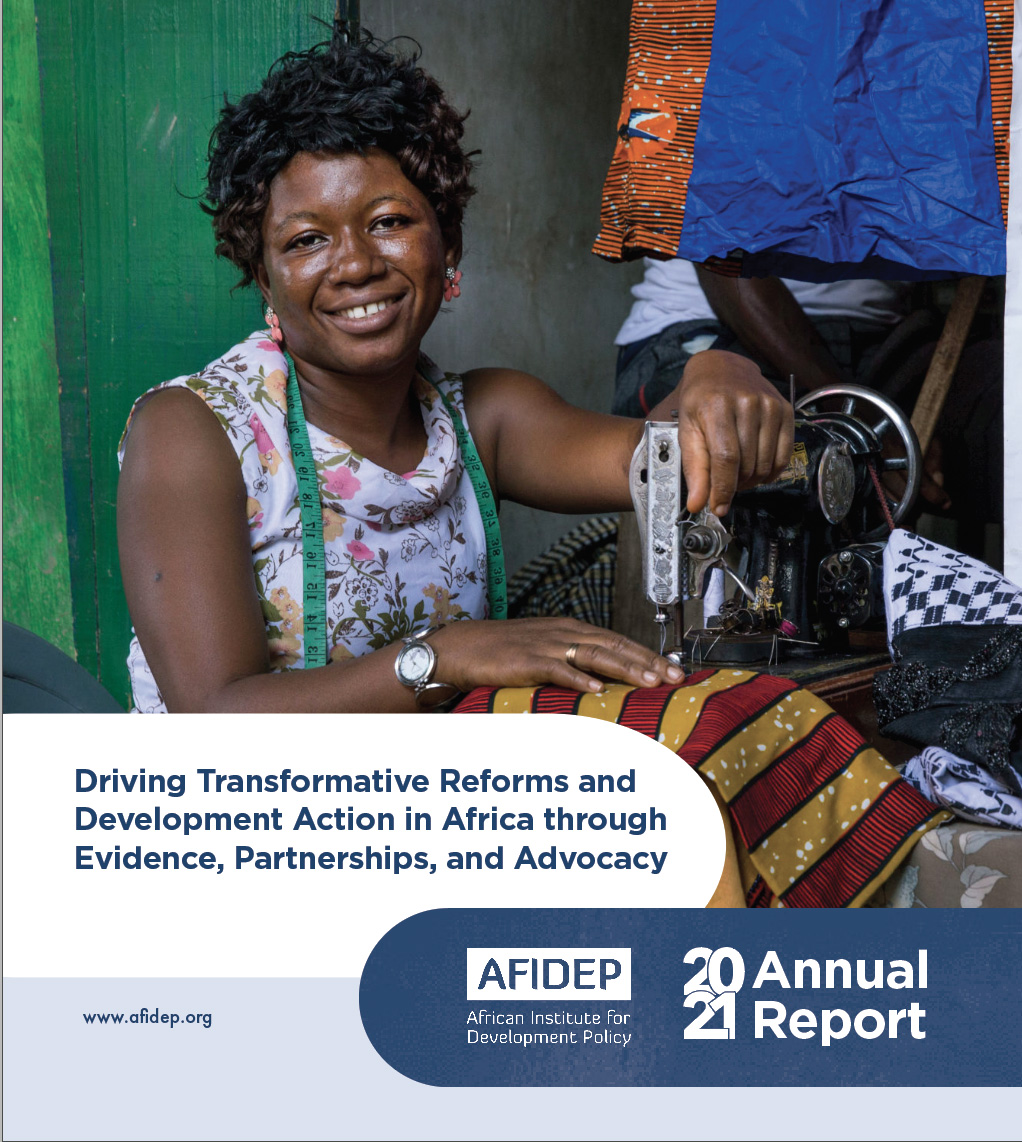
At AFIDEP, we believe that robust, comprehensive, timely, relevant, and well-packaged evidence should inform all public policy formulation and implementation decisions to achieve optimal development outcomes. This 2021 annual report highlights our impact and the considerable progress we have made towards achieving the mandate of our We continue to build on our achievements and expand our partnerships to ensure evidence counts towards transforming people’s lives throughout Africa.
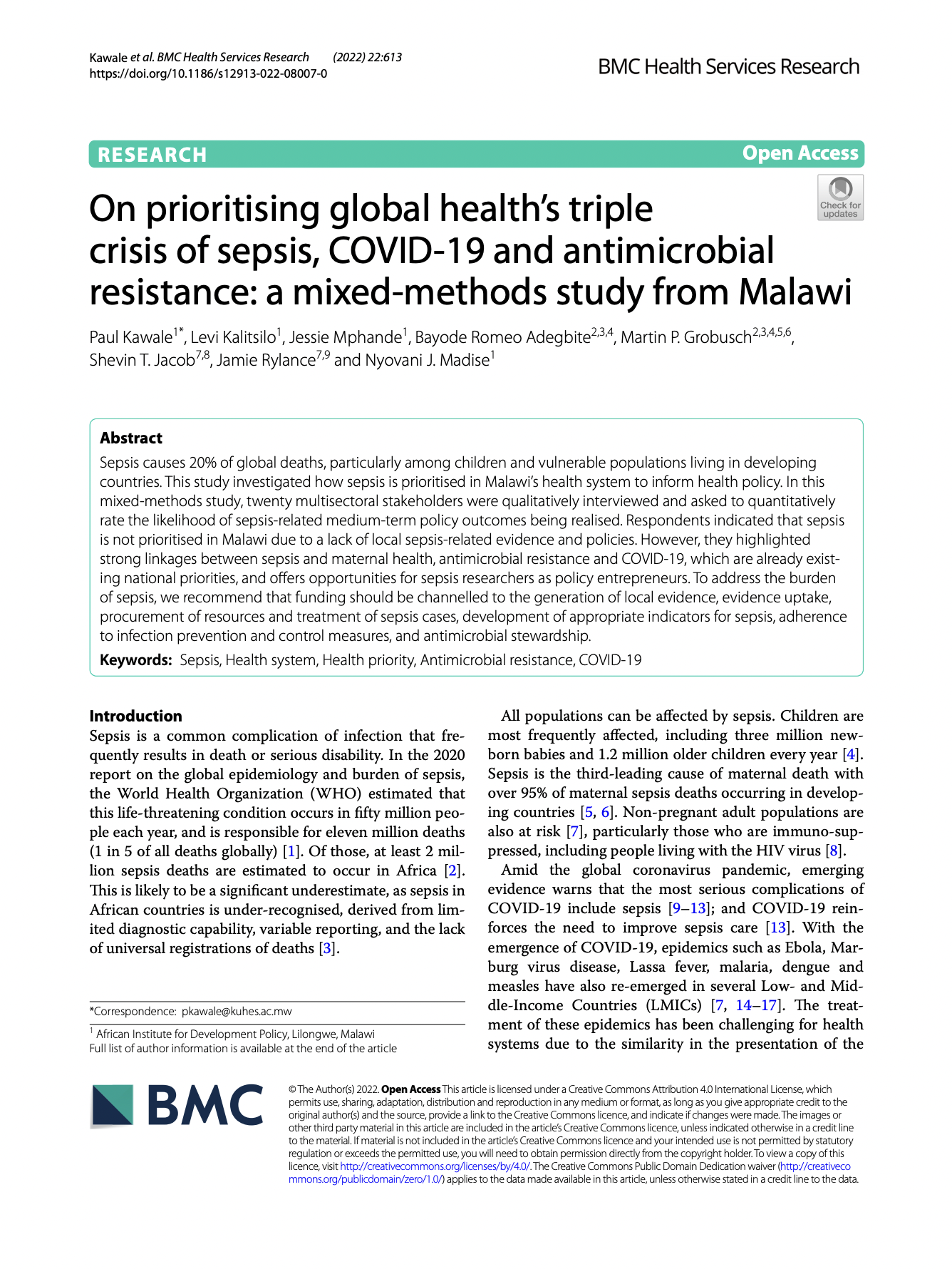
Sepsis causes 20% of global deaths, particularly among children and vulnerable populations living in developing countries. This study investigated how sepsis is prioritised in Malawi’s health system to inform health policy. In this mixed-methods study, twenty multisectoral stakeholders were qualitatively interviewed and asked to quantitatively rate the likelihood of sepsis-related medium-term policy outcomes being realised. Respondents indicated that sepsis is not prioritised in Malawi due to a lack of local sepsis-related evidence and policies. However, they highlighted strong linkages between sepsis and maternal health, antimicrobial resistance and COVID-19, which are already existing national priorities, and offers opportunities for sepsis researchers […]
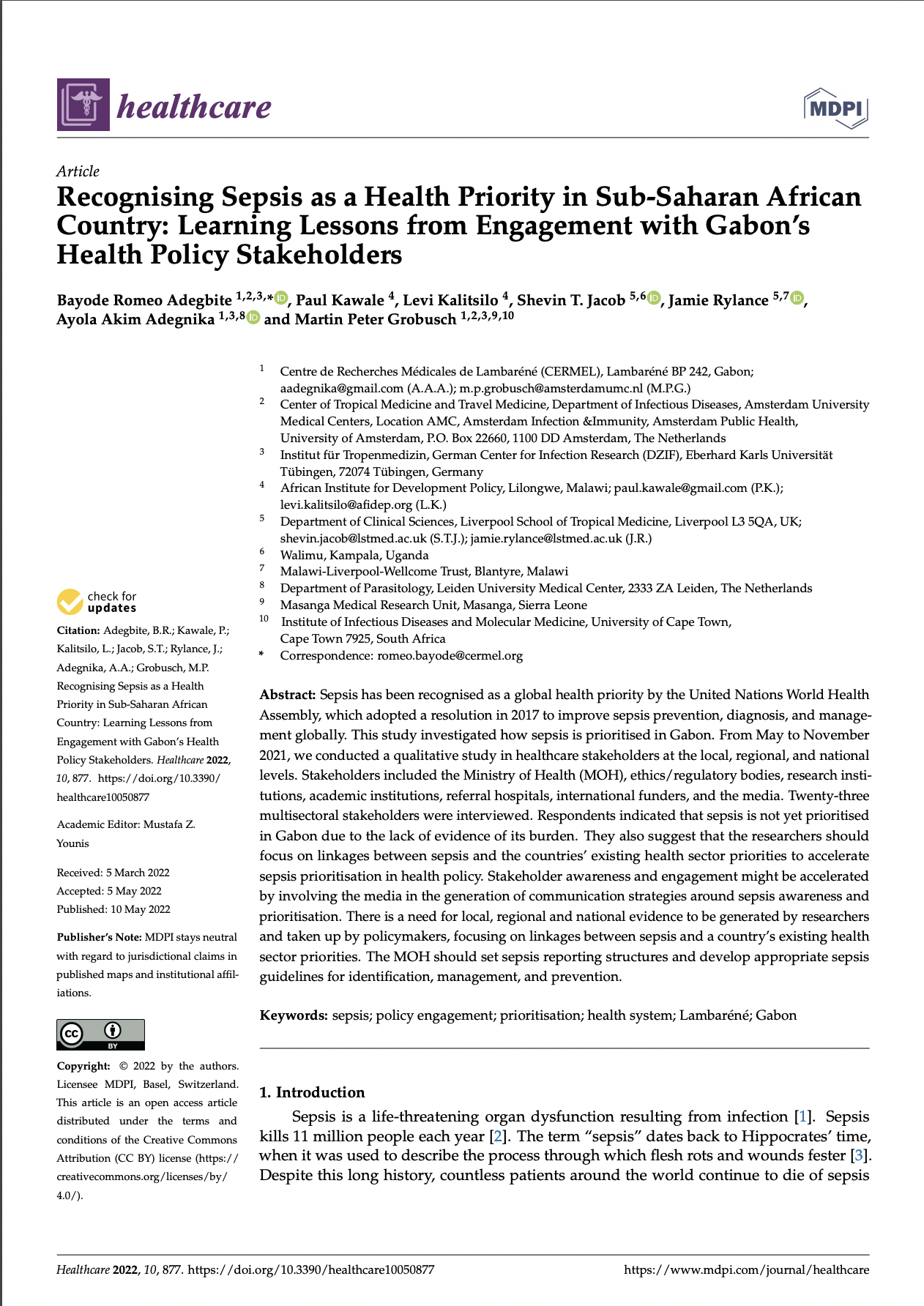
Sepsis has been recognised as a global health priority by the United Nations World Health Assembly, which adopted a resolution in 2017 to improve sepsis prevention, diagnosis, and management globally. This study investigated how sepsis is prioritised in Gabon. From May to November 2021, we conducted a qualitative study in healthcare stakeholders at the local, regional, and national levels. Stakeholders included the Ministry of Health (MOH), ethics/regulatory bodies, research institutions, academic institutions, referral hospitals, international funders, and the media. Twenty-three multisectoral stakeholders were interviewed. Respondents indicated that sepsis is not yet prioritised in Gabon due to the lack of evidence […]

Although Tuberculosis (TB) affects people of both sexes and all age groups, the highest-burden is in adult men, who accounted for 56% of all global TB cases in 2019. In Kenya, 66% of all cases notified with TB in 2020 were men. Policies on gender and TB should place greater emphasis on the high burden of TB among men and the need to invest in male-friendly diagnostic and screening services, with the aim of reducing undiagnosed TB. This compelling evidence necessitates development of policies that guide a gendered approach to resources and interventions to end TB.

A range of social factors can act to either exacerbate the health impacts of the environmental effects of climate change or to help mitigate them with public health interventions. These interventions are well articulated in policies that provide collective interventions affecting transformation in social welfare, social institutions and social relations. Kenya has an advanced legal framework and a suite of policies, strategies, plans in place to address climate change.

In January 2021, the Guttmacher Institute released the first comprehensive compilation of evidence about abortion incidence and safety in Sub-Saharan Africa overall, as well as in each of its four subregions (Eastern Africa, Middle Africa, Southern Africa, and Western Africa). In the report titled: From Unsafe to Safe Abortion in Sub-Saharan Africa: Slow but Steady Progress, the Guttmacher Institute provides an overview of the legality of abortion and describes how often and how safely abortions occur in the region’s 48 countries. It also offers an analysis of the underlying context of abortion—namely, unintended pregnancy and access to modern contraceptives. The reports estimates […]

Building Capacity for Integrated Family planning (FP) and Reproductive Health (RH) and Population, Environment and Development (PED) Action (BUILD) is a global program designed to leverage the interconnectedness of Population, Environment and Development, to spur strong political commitment, sustained financial resources, and accountability for voluntary family planning and reproductive health in low-and middle-income countries (LMICs). The BUILD Project seeks to address interlinked Population, Environment and Development (PED) challenges for sustainable development in LMICs to enable integrated FP/RH and PED action using the Systems thinking approach.

L’avortement à risque est un problème persistant en Afrique subsaharienne (ASS). En janvier 2021, l’Institut Guttmacher a publié la première compilation complète de preuves sur l’incidence et la sécurité de l’avortement en Afrique subsaharienne. Dans un rapport intitulé : De l’avortement à risque à l’avortement sécurisé en Afrique subsaharienne : des progrès lents mais constants, l’Institut Guttmacher donne un aperçu de la légalité de l’avortement et décrit la fréquence et la sécurité des avortements dans les 48 pays de la région. Il propose également une analyse du contexte de base de l’avortement, à savoir la grossesse non désirée et l’accès […]
Given the primary functions of parliaments and the central role they play in countries’ development efforts, they are often inadequately staffed and equipped and therefore unable to support sustained use of evidence in parliamentary debate and decision-making. In sub-Saharan African countries, many parliaments must contend with weak institutional systems, structures and capacities – among other factors. Strengthening evidence systems for better and quality debate and decision-making, must therefore remain a priority for both scholars and practitioners. The publication is a collection of reflections from parliamentarians and practitioners. Read reflections from AFIDEP’s Dr. Rose Oronje’s reflections on page xxii. Access the […]

Globally, 2.8 million newborns die each year, with low and middle-income countries (LMICs) contributing to 98% of this burden. In Kenya, neonatal mortality has continued to be a major health challenge for the past decade. Kangaroo Mother Care (KMC) is an effective evidence-based intervention to reduce neonatal morbidity and mortality, and the health system plays an essential role in the scale-up and adoption of KMC. Read further on these neonatal interventions.